
Delving into the realm of truck accident settlements, this article uncovers the key factors that influence case value, shedding light on a complex yet crucial aspect of legal proceedings.
Exploring the nuances of liability, damages, and insurance coverage, we navigate through the maze of factors that can sway settlement amounts in unexpected ways.
Factors affecting average settlement value
When it comes to determining the average settlement value for a truck accident, several key factors come into play. These factors can significantly impact the final amount that a victim may receive as compensation. Let’s explore how liability, damages, insurance coverage, negligence, evidence, and state laws can influence the average settlement value.
Liability
Liability refers to who is at fault for the truck accident. If the truck driver or the trucking company is found to be negligent and responsible for the crash, the settlement value is likely to be higher. On the other hand, if the victim shares some level of fault, it can reduce the overall settlement amount.
Damages
The extent of damages suffered by the victim plays a crucial role in determining the settlement value. This includes medical expenses, lost wages, property damage, pain and suffering, and other related costs. The more severe the injuries and financial losses, the higher the settlement value is likely to be.
Insurance Coverage
The insurance coverage carried by the at-fault party can also impact the settlement value. If the insurance policy has higher coverage limits, it may lead to a larger settlement amount. However, if the insurance coverage is limited, the victim may receive a lower settlement.
Negligence and Evidence
Proving negligence through strong evidence is essential in determining the settlement value. The more evidence available to support the victim’s claim of negligence by the truck driver or company, the stronger the case for a higher settlement amount.
State Laws
State laws regarding personal injury and truck accidents can vary significantly. Some states have laws that may limit the amount of compensation a victim can receive, while others may have provisions that allow for higher settlements. Understanding the specific laws in the state where the accident occurred is crucial in determining the final settlement value.
Importance of Medical Documentation
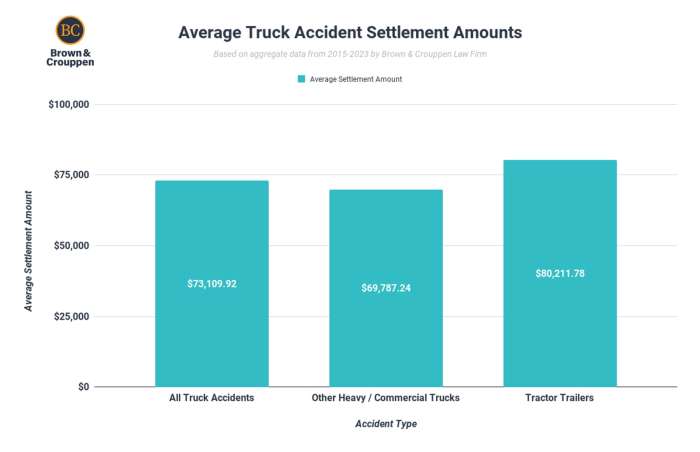
Thorough medical documentation plays a crucial role in maximizing a truck accident settlement. It provides concrete evidence of the injuries sustained, the treatment received, and the overall impact on the victim’s health and well-being. Insurance companies and legal teams rely heavily on medical records to assess the severity of the injuries and determine the appropriate compensation.
Essential Medical Records and Reports
- Emergency room records
- Doctor’s notes and progress reports
- Radiology reports (X-rays, MRIs, CT scans)
- Surgical reports
- Physical therapy and rehabilitation notes
- Pain journal or diary
Having these records readily available can strengthen the settlement case by providing a clear timeline of the medical treatment received and the progression of the injuries.
Pre-Existing Conditions and Disclosure
- Pre-existing conditions can impact the settlement value by complicating the assessment of the new injuries caused by the truck accident.
- It is crucial to disclose any pre-existing conditions to avoid any challenges to the credibility of the claim.
- However, pre-existing conditions do not automatically disqualify a victim from seeking compensation, especially if the accident exacerbated these conditions.
Properly disclosing pre-existing conditions and providing comprehensive medical documentation can help ensure a fair and accurate assessment of the settlement value in a truck accident case.
Legal representation and negotiation
When it comes to settling a truck accident case, hiring an experienced attorney can make a significant difference in the outcome of your settlement. A skilled lawyer will have the knowledge and expertise to navigate the complex legal process, negotiate with insurance companies, and advocate for your best interests.
Choosing the right lawyer
- Look for a lawyer who specializes in personal injury and has experience with truck accident cases.
- Consider the attorney’s track record of success in negotiating settlements for their clients.
- Meet with potential lawyers for a consultation to discuss your case and assess their communication style and approach.
Negotiating a higher settlement
- Legal representation can help in gathering evidence, assessing damages, and presenting a strong case for maximum compensation.
- Your attorney can engage in negotiations with insurance companies on your behalf to push for a fair and just settlement.
- Experienced lawyers understand common tactics used by insurance companies to devalue claims and can counter them effectively.
Having a skilled attorney on your side can level the playing field and ensure you receive the compensation you deserve.
Emotional and Non-Economic Damages
When it comes to truck accident settlements, emotional and non-economic damages play a significant role in determining the final compensation amount. These types of damages can greatly impact the overall value of a settlement, as they account for the intangible losses and suffering experienced by the victim.
Types of Non-Economic Damages
Non-economic damages in a truck accident settlement can include compensation for emotional distress, pain and suffering, loss of enjoyment of life, and loss of consortium. These damages are not easily quantifiable in monetary terms but are crucial in addressing the emotional and psychological impact of the accident on the victim.
- Emotional Distress: This includes the mental anguish, anxiety, and trauma experienced as a result of the accident.
- Pain and Suffering: Compensation for the physical pain and emotional suffering endured by the victim due to the injuries sustained.
- Loss of Enjoyment of Life: This accounts for the impact the injuries have on the victim’s ability to participate in activities they once enjoyed.
Impact on Settlement Value
In determining the settlement value, non-economic damages are considered alongside economic losses such as medical expenses and lost wages. Insurance adjusters and courts take into account the severity of the emotional distress, pain and suffering, and loss of enjoyment of life when calculating the final compensation amount.
For example, a truck accident victim who suffered severe emotional distress and chronic pain may receive a higher settlement amount compared to a victim with minor injuries and no long-term emotional impact.
Examples of Impact on Settlement Amount
In cases where the victim has experienced significant emotional distress, chronic pain, or permanent disability as a result of the truck accident, the non-economic damages can substantially increase the final settlement amount. For instance, a victim who can no longer engage in their favorite hobbies or activities due to the injuries sustained may be awarded a higher compensation to account for the loss of enjoyment of life.
Summary
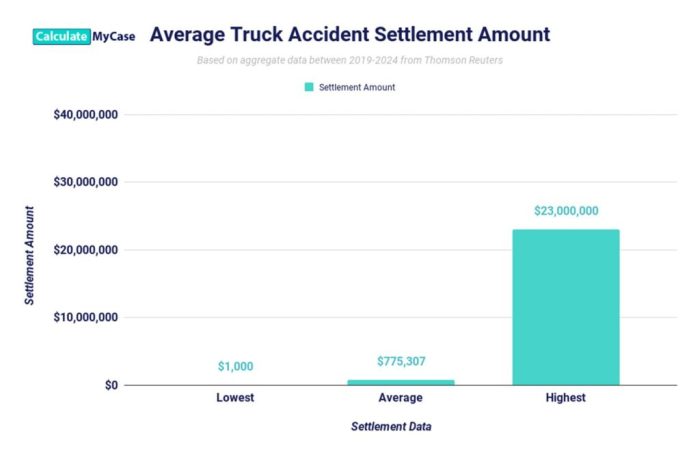
As we reach the end of this discussion, it becomes clear that the intricacies of truck accident settlements are vast and varied, underscoring the importance of understanding the driving forces behind case value.
FAQ Overview
What role does negligence play in determining the final settlement value?
Negligence can heavily impact the final settlement value, as it determines who is at fault for the accident and to what extent. The more negligent party is usually held responsible for a larger portion of the damages.
Why is disclosing pre-existing conditions important in a truck accident settlement?
Disclosing pre-existing conditions is crucial as it affects the assessment of damages and the overall settlement value. Failure to disclose can lead to complications in the case.
How can an experienced attorney help in negotiating a higher settlement for a truck accident case?
An experienced attorney can leverage their knowledge of the legal system and negotiation skills to advocate for a higher settlement amount, ensuring that your rights are protected and maximizing your compensation.








![Depo-Provera Brain Tumor Lawsuit [August 2025 Update]](https://foqe.net/wp-content/uploads/2026/05/daa362ed3199f833d355b174e051992e-120x86.jpg)