
Professional Liability Insurance: Do You Really Need It? sets the stage for this enthralling narrative, offering readers a glimpse into a story that is rich in detail and brimming with originality from the outset. It delves into the crucial aspects of professional liability insurance, shedding light on its importance and relevance in various professions.
The following paragraphs will provide detailed insights into the coverage details, factors to consider, legal implications, and FAQs surrounding professional liability insurance, ensuring a comprehensive understanding of this vital aspect of risk management.
Overview of Professional Liability Insurance
Professional liability insurance, also known as errors and omissions insurance, is a type of coverage that protects professionals from claims of negligence or inadequate work performance. This insurance is essential for professionals who provide services or advice to clients, as it can help cover legal expenses and damages in case of a lawsuit.
Types of Professionals Requiring Coverage
- Doctors and healthcare professionals
- Lawyers and legal professionals
- Consultants and financial advisors
- Architects and engineers
Scenarios Where Professional Liability Insurance is Essential
- A doctor is sued for medical malpractice after a surgical error.
- A lawyer is accused of providing incorrect legal advice that leads to financial losses for a client.
- An architect’s design flaw results in structural damage to a building.
Consequences of Not Having Professional Liability Insurance
Without professional liability insurance, professionals risk facing significant financial losses in the event of a lawsuit. Legal fees, court settlements, and damages awarded to the claimant can be substantial and potentially ruinous to a professional’s career and financial stability. Additionally, the professional’s reputation may suffer irreparable damage, affecting future business opportunities.
Coverage Details
Professional liability insurance, also known as errors and omissions insurance, is designed to protect professionals from claims of negligence or failure to perform their professional duties. This type of insurance provides coverage for legal costs and damages resulting from lawsuits related to professional services.
Risks Covered
- Professional Errors: Coverage for mistakes or errors made in the course of providing professional services.
- Negligence: Protection against claims of negligence or failure to meet professional standards.
- Legal Defense Costs: Reimbursement for legal fees and court costs in defending against a claim.
Professional vs. General Liability Insurance
Professional liability insurance differs from general liability insurance in that it specifically covers risks related to professional services, while general liability insurance covers bodily injury, property damage, and personal injury claims.
Limits of Coverage and Exclusions
- Policy Limits: Professional liability insurance policies have limits on the amount of coverage provided for each claim and in aggregate for the policy period.
- Exclusions: Common exclusions may include intentional wrongdoing, criminal acts, and claims arising from services not covered by the policy.
Determining Coverage Amounts
The coverage amounts for professional liability insurance are typically determined based on factors such as the type of profession, the size of the business, the level of risk involved, and past claims history. Higher-risk professions or businesses may require higher coverage limits to adequately protect against potential claims.
Factors to Consider
When deciding whether or not to invest in professional liability insurance, there are several factors that professionals should consider. This type of insurance can provide financial protection in case of lawsuits or claims of negligence, errors, or omissions in the services provided.
Here are some key factors to keep in mind:
Professional’s Risk Exposure
- Assess the level of risk exposure in your profession: Some professions are inherently riskier than others, and professionals in fields such as healthcare, legal, or financial services may face a higher likelihood of lawsuits.
- Consider the potential financial impact of a lawsuit: Legal fees and settlement costs can be substantial, so it’s important to evaluate whether you have the financial resources to cover these expenses out of pocket.
Cost-Benefit Analysis
- Conduct a cost-benefit analysis: Compare the cost of professional liability insurance premiums to the potential financial consequences of not having coverage. In many cases, the cost of insurance is significantly lower than the costs associated with a lawsuit.
- Factor in peace of mind: Having insurance can provide peace of mind and allow you to focus on your work without constantly worrying about the risk of a lawsuit.
Evaluating Insurance Providers
- Research different insurance providers: Compare coverage options, premiums, deductibles, and customer reviews to find a provider that offers the best value for your specific needs.
- Check the financial stability of the insurance company: Make sure the provider has a strong financial standing and a history of paying out claims in a timely manner.
Adapting to Changes
- Monitor changes in your practice or industry: As your practice evolves or industry regulations change, your insurance needs may also evolve. It’s important to regularly reassess your coverage to ensure it aligns with your current risk exposure.
- Consult with an insurance agent or broker: Seek professional advice to help you navigate changes in your practice or industry and determine the appropriate level of coverage needed.
Legal Implications
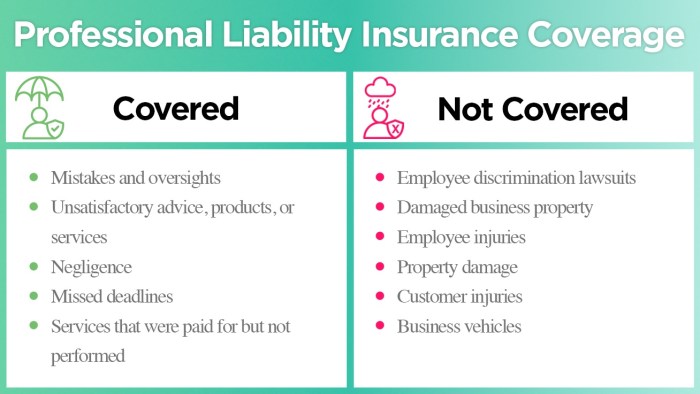
Professional liability insurance plays a crucial role in protecting individuals and businesses from legal risks and financial consequences. Let’s delve into the legal implications of not having this coverage and the importance of meeting legal requirements.
Legal Requirements for Professional Liability Insurance
In various industries and regions, there are specific legal requirements for maintaining professional liability insurance. For example, healthcare professionals, attorneys, accountants, and architects are often mandated by law to have this coverage to practice. Failure to comply with these requirements can result in penalties, license suspension, or even legal action.
Examples of Legal Cases
Numerous legal cases highlight the severe consequences of not having professional liability insurance. For instance, a doctor without malpractice insurance facing a lawsuit for medical negligence may have to pay substantial damages out of pocket, leading to financial ruin. These cases underscore the importance of being adequately insured to mitigate legal risks.
Role of Professional Associations and Regulatory Bodies
Professional associations and regulatory bodies often recommend or require their members to obtain professional liability insurance. These organizations aim to uphold standards of practice, protect clients, and safeguard professionals from liability claims. By adhering to these recommendations or requirements, individuals can demonstrate their commitment to ethical conduct and accountability.
Protection Against Lawsuits and Legal Fees
Professional liability insurance provides coverage for legal expenses incurred in defending against lawsuits related to professional negligence, errors, or omissions. This coverage can encompass legal fees, court costs, settlements, and damages awarded to claimants. By having professional liability insurance, individuals and businesses can safeguard their assets and reputation in the face of legal challenges.
Closing Summary
In conclusion, Professional Liability Insurance: Do You Really Need It? navigates through the complexities of insurance needs for professionals, emphasizing the significance of having adequate coverage. By exploring the legal aspects, coverage details, and factors to consider, it becomes evident that this type of insurance is a valuable asset in safeguarding professionals against unforeseen risks.
Expert Answers
Do all professionals need professional liability insurance?
Not all professionals may require professional liability insurance, but it is highly recommended for those in fields where errors or negligence could lead to financial loss or legal action.
Is there a difference between professional liability insurance and general liability insurance?
Yes, professional liability insurance specifically covers errors, negligence, and malpractice in professional services, while general liability insurance covers bodily injury and property damage claims.
How can I determine the right coverage amount for professional liability insurance?
The coverage amount should be based on the risks involved in your profession, the potential financial loss in case of a claim, and any legal requirements or contractual obligations.
Are legal fees covered under professional liability insurance?
Professional liability insurance may cover legal fees associated with defending against claims of professional negligence, but the extent of coverage can vary depending on the policy.








![Depo-Provera Brain Tumor Lawsuit [August 2025 Update]](https://foqe.net/wp-content/uploads/2026/05/daa362ed3199f833d355b174e051992e-120x86.jpg)