In the realm of legal cases involving autonomous vehicles, the presence of an AI car accident liability attorney is becoming increasingly significant. This introductory segment aims to captivate readers with a glimpse into the role of AI technology in reshaping the landscape of car accident liability cases, promising a riveting exploration ahead.
Delving deeper, we will uncover the innovative ways AI is utilized to gather evidence, analyze liability, and revolutionize legal practice in car accident scenarios.
AI Car Accident Liability Attorney
An AI car accident liability attorney plays a crucial role in legal cases involving autonomous vehicles by utilizing artificial intelligence technology to gather evidence and analyze liability in car accidents. This innovative approach brings numerous benefits to the legal practice, enhancing efficiency and accuracy in determining fault and resolving disputes.
Examples of AI Technology in Car Accident Cases
- AI algorithms can analyze vast amounts of data from sensors, cameras, and other sources to reconstruct accident scenarios and determine the sequence of events leading to the collision.
- Machine learning models can predict potential outcomes based on historical data, helping attorneys assess liability and develop effective legal strategies.
- Natural language processing tools can review and summarize medical records, police reports, and witness statements to identify key details relevant to the case.
Benefits of AI in Legal Practice for Car Accident Cases
- Improved accuracy: AI technology can analyze data with precision, reducing the margin of error in determining liability and strengthening legal arguments.
- Efficient case management: Automated processes streamline document review, evidence analysis, and case preparation, saving time and resources for attorneys.
- Enhanced decision-making: AI systems can provide insights and recommendations based on data analysis, empowering attorneys to make informed decisions and negotiate effectively on behalf of their clients.
Legal Implications
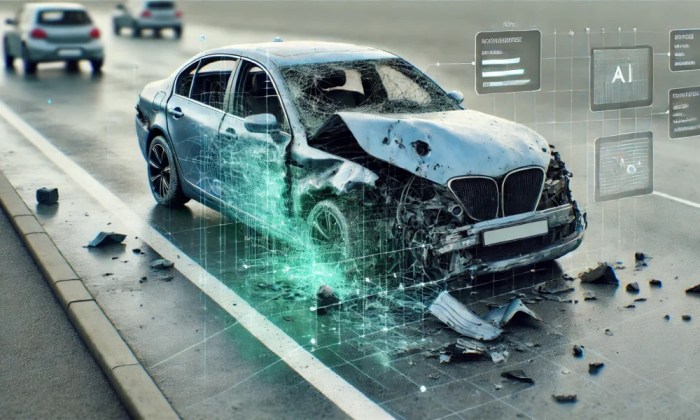
In the realm of car accidents, the legal implications of AI technology in determining liability have become increasingly significant. As AI systems are being utilized to assess fault in these cases, it is crucial to understand the differences between traditional legal methods and AI-driven approaches and the challenges that come with relying on AI for determining liability.
Traditional Legal Methods vs. AI-Driven Approaches
When it comes to determining liability in car accidents, traditional legal methods typically involve human interpretation of evidence, witness statements, and relevant laws. This process can be subjective and prone to biases. On the other hand, AI-driven approaches utilize algorithms and data analysis to assess fault based on a set of predefined rules and patterns.
These systems can process vast amounts of data quickly and objectively, potentially leading to more accurate outcomes.
- AI systems can analyze various factors such as vehicle speed, road conditions, and driver behavior to determine fault in a car accident.
- Traditional legal methods rely heavily on the interpretation of human experts, which can be influenced by personal biases and experience.
- AI-driven approaches have the potential to streamline the legal process and provide more consistent outcomes across different cases.
Challenges and Limitations of Relying on AI
While AI technology offers many advantages in determining liability for car accidents, there are also challenges and limitations that need to be considered. These include issues related to data accuracy, system reliability, and ethical concerns.
- AI systems may not always have access to all relevant information, leading to potential inaccuracies in determining fault.
- There is a risk of bias in AI algorithms if not properly designed and trained, which could result in unfair outcomes.
- Legal professionals and policymakers need to address the ethical implications of relying on AI to make critical decisions in legal cases.
Ethical Considerations
The use of AI in legal proceedings related to car accidents brings about various ethical considerations that need to be carefully examined. One of the main concerns is the potential biases that may arise from AI algorithms used by car accident liability attorneys, which could impact the outcome of cases.
Additionally, the importance of transparency and accountability when employing AI technology in legal practice cannot be overstated. It is crucial for all parties involved to understand how AI is being used and to ensure that its use is fair and unbiased.
Potential Biases in AI Algorithms
AI algorithms used by car accident liability attorneys may unintentionally perpetuate biases present in the data they are trained on. For example, if historical data used to train the AI system is biased towards certain demographics or types of accidents, the AI may make decisions that disproportionately favor or disfavor certain groups.
It is essential for legal professionals to be aware of these potential biases and take steps to mitigate them to ensure fair and just outcomes for all parties involved.
Importance of Transparency and Accountability
Transparency and accountability are crucial when employing AI technology in legal practice, especially in cases involving car accidents. It is essential for attorneys to be transparent about the use of AI in their practice and to ensure that decisions made by AI systems are explainable and understandable.
Additionally, there must be mechanisms in place to hold both the AI system and the legal professionals using it accountable for their decisions. Without transparency and accountability, the use of AI in legal proceedings can lead to unjust outcomes and erode trust in the legal system.
Future of AI in Legal Practice
The integration of AI technology in the legal practice, particularly in assisting car accident liability attorneys, is expected to evolve significantly in the future. AI has the potential to revolutionize the way legal processes are conducted, especially in handling car accident cases.
Advancements in AI Technology
- Improved Data Analysis: AI algorithms can analyze vast amounts of data related to car accidents, including traffic patterns, weather conditions, and driver behavior, to identify liability and determine fault more accurately.
- Natural Language Processing: AI-powered systems can sift through legal documents, case law, and precedent to provide relevant information and assist attorneys in building their case effectively.
- Predictive Analytics: AI can help predict case outcomes based on historical data, allowing attorneys to make more informed decisions and strategize their approach to car accident liability claims.
Implications of Widespread AI Adoption in Legal Profession
- Increased Efficiency: AI can streamline the legal process by automating repetitive tasks, allowing attorneys to focus on more complex aspects of car accident cases.
- Enhanced Accuracy: AI technology can minimize human error in legal proceedings, ensuring that car accident liability claims are handled with precision and consistency.
- Cost-Effectiveness: By improving efficiency and accuracy, AI can potentially reduce the time and resources required to resolve car accident cases, benefiting both clients and legal practitioners.
Final Wrap-Up
As we conclude this discussion, it becomes evident that the integration of AI in legal proceedings surrounding car accidents holds profound implications for the future. The blend of technology and legal expertise opens the door to a new era of efficiency and accuracy in handling car accident liability claims.
FAQ
What role does an AI car accident liability attorney play in legal cases involving autonomous vehicles?
An AI car accident liability attorney assists in analyzing evidence, determining liability, and navigating the complexities of autonomous vehicle accidents using AI technology.
How does AI technology impact the legal implications of determining liability in car accidents?
AI technology introduces new methods for assessing fault in car accident cases, offering a comparison to traditional legal approaches and highlighting challenges and limitations in liability determination.
What ethical considerations are associated with the use of AI in legal proceedings related to car accidents?
Ethical considerations include potential biases in AI algorithms, emphasizing the importance of transparency and accountability when utilizing AI technology in legal practice.
How might AI technology evolve to assist car accident liability attorneys in the future?
The future of AI in legal practice may see advancements enhancing accuracy and efficiency, ultimately reshaping how car accident cases are handled and liability claims are addressed.
![Depo-Provera Brain Tumor Lawsuit [August 2025 Update]](https://foqe.net/wp-content/uploads/2026/05/daa362ed3199f833d355b174e051992e-75x75.jpg)







![Depo-Provera Brain Tumor Lawsuit [August 2025 Update]](https://foqe.net/wp-content/uploads/2026/05/daa362ed3199f833d355b174e051992e-120x86.jpg)