
Starting off with Debt Consolidation Loan: Lower Your Payments Fast, this introduction aims to grab the attention of the readers, providing a brief but engaging overview of the topic.
The following paragraph will delve into the specifics of how debt consolidation loans work and their benefits.
What is a Debt Consolidation Loan?
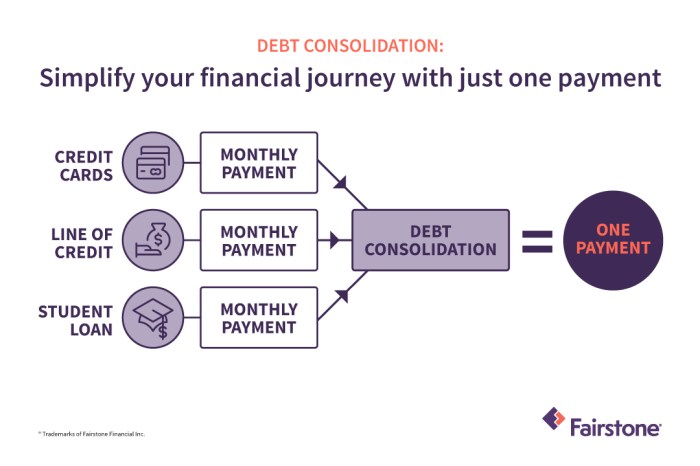
Debt consolidation loan is a financial tool that allows individuals to combine multiple debts into a single loan with one monthly payment. This loan is typically used to pay off high-interest debts like credit card balances, medical bills, or personal loans.
How does a Debt Consolidation Loan work to lower payments?
Debt consolidation loans work by combining all existing debts into one new loan with a lower interest rate than the individual debts. This can result in lower monthly payments, making it easier for borrowers to manage their finances and pay off debt more efficiently.
- By consolidating debts, borrowers can potentially reduce the total amount of interest paid over time.
- Having a single monthly payment simplifies the repayment process and helps avoid missed payments.
- Lower interest rates on the consolidation loan can lead to overall savings on interest payments.
Benefits of consolidating debt through a loan
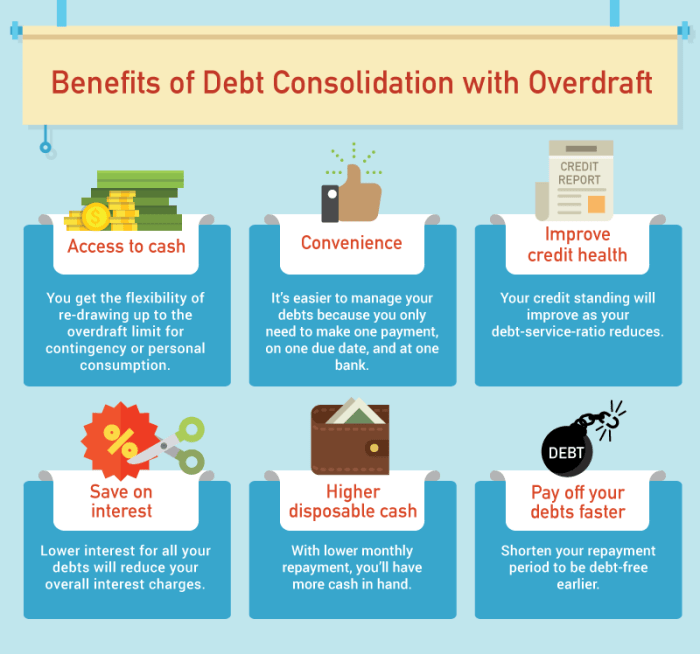
Debt consolidation through a loan offers several benefits to borrowers looking to improve their financial situation and manage debt more effectively.
- Streamlined repayment process: Instead of managing multiple payments, borrowers only need to focus on one monthly payment.
- Potential for lower interest rates: Consolidation loans often come with lower interest rates than credit cards or other high-interest debts.
- Improved credit score: Making consistent payments on a consolidation loan can positively impact a borrower’s credit score over time.
- Reduced stress: Simplifying debt repayment can reduce financial stress and help individuals regain control of their finances.
Types of Debt Consolidation Loans
When considering debt consolidation, it’s important to understand the different types of loans available to determine which option best suits your financial situation. Debt consolidation loans can be categorized into two main types: secured and unsecured.
Secured Debt Consolidation Loans
Secured debt consolidation loans require collateral, such as your home or car, to secure the loan. By using collateral, borrowers may qualify for lower interest rates and higher loan amounts. However, there is a risk of losing the collateral if payments are not made as agreed.
Secured loans are typically recommended for individuals with valuable assets and a good credit history.
Unsecured Debt Consolidation Loans
Unsecured debt consolidation loans do not require collateral, making them a less risky option for borrowers. However, interest rates on unsecured loans are usually higher, and loan amounts may be limited. These loans are suitable for individuals who do not have valuable assets to use as collateral or those who prefer not to put their assets at risk.Consider your financial situation, credit score, and ability to provide collateral when deciding between secured and unsecured debt consolidation loans.
It’s essential to weigh the pros and cons of each type to choose the loan that aligns best with your needs and goals.
Steps to Lower Payments Fast
When looking to lower your payments quickly through a debt consolidation loan, there are several steps you can take to improve your financial situation and reduce the burden of multiple debts.
Negotiating Better Terms or Interest Rates
- Review your current debts and interest rates to understand where you can potentially save money.
- Reach out to your creditors to negotiate lower interest rates or more favorable repayment terms.
- Consider transferring high-interest debts to a lower interest rate loan or credit card to reduce overall costs.
- Seek the help of a credit counselor or debt consolidation service to assist you in negotiating better terms with your creditors.
Strategies to Accelerate the Repayment Process
- Create a budget to track your expenses and identify areas where you can cut back to allocate more funds towards debt repayment.
- Consider increasing your income through part-time work or selling unused items to boost your debt repayment efforts.
- Focus on paying off high-interest debts first while making minimum payments on others to save on interest charges.
- Automate your debt payments to ensure you never miss a due date and incur additional fees.
Impact on Credit Score
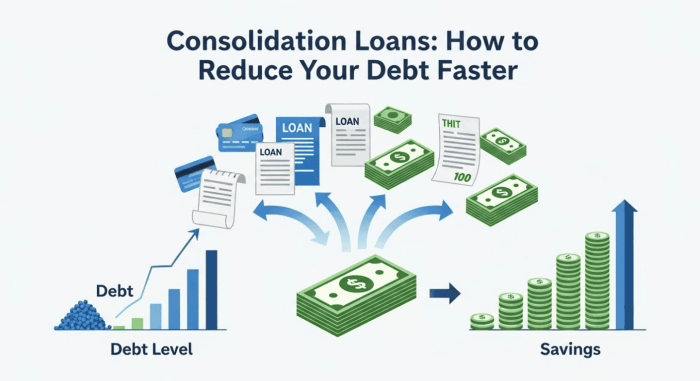
When considering a debt consolidation loan, it’s important to understand how it can impact your credit score. While debt consolidation can have both positive and negative effects on your credit, being aware of these potential risks is crucial to managing your financial health.
Credit Score Impact
- Consolidating your debts with a loan can initially cause a slight dip in your credit score due to the new credit inquiry and the potential closing of old accounts.
- However, if you make timely payments on your consolidation loan and reduce your overall debt, your credit score may improve over time.
- Having a lower credit utilization ratio from consolidating multiple debts into one loan can positively impact your credit score.
Risks to Credit Score
- Missing payments on your consolidation loan can significantly harm your credit score, as payment history is a major factor in determining creditworthiness.
- Closing old credit accounts after consolidating can shorten your credit history, potentially lowering your credit score.
- Increasing your overall debt load by taking out a consolidation loan without addressing the root cause of your debt can worsen your credit situation.
Maintaining or Improving Credit
- Make sure to continue making payments on time and in full to avoid any negative impact on your credit score.
- Monitor your credit report regularly to catch any errors or signs of identity theft that could harm your credit.
- Consider working with a credit counselor or financial advisor to create a plan for managing your debt and improving your credit score.
Last Recap
Concluding this discussion on Debt Consolidation Loan: Lower Your Payments Fast, we have explored the key aspects of lowering payments through consolidation loans.
FAQ Compilation
What is a Debt Consolidation Loan?
A debt consolidation loan combines multiple debts into one, usually with a lower interest rate, making it easier to manage payments.
How can a debt consolidation loan affect credit scores?
Consolidating debt can initially lower credit scores due to a new account opening, but it can improve scores over time with timely payments.
What types of debt consolidation loans are available?
There are secured and unsecured debt consolidation loans, each with its own features and eligibility requirements.
How can one negotiate better terms for a consolidation loan?
One can negotiate better terms by showcasing a good credit history and comparing offers from multiple lenders to find the most favorable terms.
What are some strategies to accelerate the repayment process?
Accelerating repayment can be done by making extra payments, cutting expenses, or even considering debt snowball or avalanche methods.








![Depo-Provera Brain Tumor Lawsuit [August 2025 Update]](https://foqe.net/wp-content/uploads/2026/05/daa362ed3199f833d355b174e051992e-120x86.jpg)